Saylor keeps buying billions in Bitcoin
12.03.2026 Saylor deploys new tool to buy BTC

Crypto Report
March 12, 2026
DAILY MARKET OVERVIEW
How Strategy Continues to Buy Bitcoin
👋 Hey, Crypto Enthusiasts! Large BTC purchases from Strategy are back on the menu so let’s explore how they do it!

Michael Saylor’s company Strategy has continued purchasing billions of dollars worth of Bitcoin, even during periods when the market slows down. These large, consistent buys absorb supply from the market and help stabilize Bitcoin’s price.
With hundreds of thousands of BTC already on its balance sheet, the company has become one of the largest Bitcoin holders in the world. When a single buyer deploys billions regularly while the total supply is limited to 21 million coins, it naturally creates strong buying pressure.

To fund these purchases, Strategy uses several financing tools. One of the newest is STRC, which effectively turns investor demand for yield into additional Bitcoin buying power.
How STRC works ❓️
STRC is a preferred stock issued by Strategy.
The mechanism is simple:
Investors buy STRC shares (around $100 each).
Strategy pays investors about 11–12% annual dividends.
The money raised is used to buy Bitcoin.
Investors keep receiving income while Strategy accumulates more BTC.
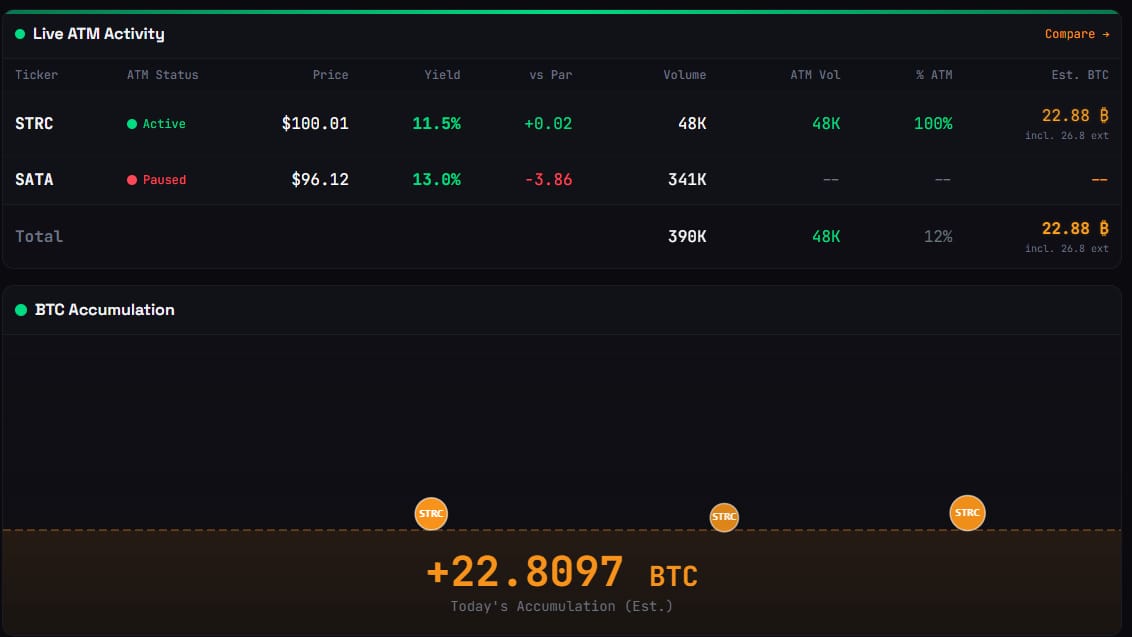
If demand for STRC grows, Strategy can issue more shares and buy even more Bitcoin, creating a continuous funding loop.
The strategy assumes that Bitcoin will grow faster than the dividend cost. As long as Bitcoin’s long-term return stays above the roughly 11% payout, the model works.
This structure effectively turns capital markets into a Bitcoin acquisition engine. If it continues to attract investors, it allows Strategy to keep buying Bitcoin at scale, tightening supply and absorbing selling pressure helping BTC stabilize faster.
THIS NEWSLETTER IS BROUGHT TO YOU BY:
OPENWALLET
Next-level security for your digital assets
Experience top security with Open Wallet. Your wallet blends user-friendliness with strong security.
|  |

SOCIAL SENTIMENT
The Hyperliquid Thesis
While most of crypto is still struggling, a quieter thesis is gaining traction around Hyperliquid.
And the idea is pretty simple:
Crypto spent years optimizing for listings. Hyperliquid is optimizing for product.
What went wrong with most crypto projects
For the past few cycles, the playbook looked something like this:
Launch a token
Build hype
Get listed on exchanges
Hope new buyers show up
In other words:
distribution > utility
That model worked during bull markets, but it created a lot of projects with weak long-term value.

Hyperliquid flipped the order
Instead of chasing listings, Hyperliquid focused on building a trading product people actually use.
The platform focuses on:
high-performance perpetual futures trading
deep liquidity
crypto-native leverage infrastructure
an experience designed for serious traders
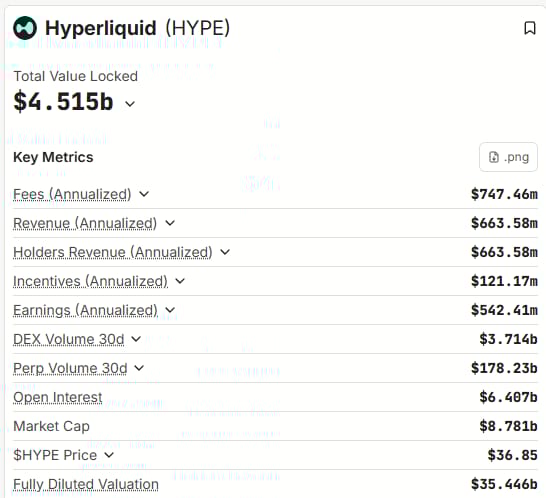
The idea is straightforward:
If you build the best place to trade, volume and value follow.
Exposure is still limited and many institutional investors cannot easily participate yet. That means the asset could remain under-owned even as the platform grows, which often creates the setup for larger moves once attention shifts.
There is also a bigger structural angle. Markets are slowly moving toward 24/7 trading across more assets. Crypto already operates that way, and if traditional markets move in that direction, crypto-native trading infrastructure could become far more important.
The thesis ultimately comes down to three ideas: crypto needs real products, trading infrastructure is one of the most valuable ones, and Hyperliquid is one of the few platforms built entirely around that. If those trends continue, it is easy to see why some traders think it could become one of the key platforms of the next cycle.
NEWS OVERVIEW
The Latest Crypto Headlines 📰
Bonk.fun Website Hack Briefly Exposes Users to Wallet Drainer
Solana memecoin launchpad Bonk.fun warned users after hackers hijacked its domain and deployed a malicious prompt designed to drain funds from connected wallets.
SEC and CFTC Agree to Coordinate Crypto Regulation
The SEC and CFTC signed a cooperation agreement to align crypto policy, remove regulatory overlap, and support the launch of new digital asset products.
White House Advisor Says Stablecoins Could Boost U.S. Bank Deposits
A top crypto advisor argued that GENIUS-compliant stablecoins could attract global capital into the U.S. banking system rather than draining deposits.
Ripple Launches $750M Share Buyback at $50B Valuation
Ripple started a $750 million share buyback program, valuing the company at $50 billion as it continues expanding through acquisitions instead of pursuing an IPO.
YOUTUBE INFLUENCER SUMMARY
Summary From The Top Influencers 📷️
CoinBureau – A War Just Proved Crypto's Whole Point (12.03.2026 Summary)

Coin Bureau highlights how a geopolitical crisis briefly exposed a major difference between traditional finance and crypto: when global markets shut down, crypto kept trading.
Key Points
On February 28, coordinated strikes in Iran triggered global panic, but traditional markets like the NYSE, treasury markets, and commodity exchanges were closed.
During that blackout, crypto markets continued trading, allowing investors to price geopolitical risk in real time.
Bitcoin quickly dropped from about $65K to $63K, triggering roughly $300 million in leveraged liquidations.
While Wall Street was offline, a decentralized exchange called Hyperliquid saw heavy trading in tokenized commodity markets like oil, gold, and silver.
These perpetual contracts allowed traders to price commodities over the weekend, something traditional markets could not do.
However, the always-open crypto market has a downside: weekend liquidity is thinner, which can amplify volatility.
Thin liquidity combined with high leverage trading can trigger liquidation cascades when prices move quickly.
As more assets like tokenized treasuries and commodities move on-chain, these liquidation dynamics could begin affecting traditional markets too.
Final Takeaway
The Iran crisis showed the core value of crypto: 24/7 global price discovery when traditional finance shuts down. But the same always-open system also creates new risks, especially when leverage and thin liquidity collide.
Paul Barron – Banks Anti-Yield Summit! (12.03.2026 Summary)

Paul Barron discusses growing political pressure from U.S. banks to restrict stablecoin yields. According to him, the banking lobby is pushing lawmakers to block crypto products that allow users to earn interest on stablecoins.
Key Points
U.S. banks recently held a banking summit in Washington D.C. where the American Bankers Association warned lawmakers about the risks of stablecoins.
Bank leaders argued that stablecoins offering yield could pull deposits out of traditional banks, which would reduce their ability to lend money.
After the lobbying push, the probability of the CLARITY Act passing reportedly dropped from about 70% to around 60%, showing the political influence banks still have.
Some lawmakers suggested banning interest or rewards on payment stablecoins to prevent what they call “deposit flight” from banks.
Banks are also pushing regulators to tighten rules around DeFi platforms, which allow lending and borrowing without traditional intermediaries.
Critics argue the real issue is that stablecoins could let users earn yield directly, bypassing banks that currently control most savings products.
The debate also extends to payment systems, where banks want to protect merchant fees and payment networks tied to credit and debit cards.
Final Takeaway
The fight over stablecoin yields is becoming a major policy battle. Banks want to protect deposits and lending power, while crypto advocates see yield-bearing stablecoins and DeFi as a way to give users more control over their money.
CRYPTO MEMES


HELP US IMPROVE
Rate today’s newsletter |
WE ALSO READ
|

|

|


The information provided in this newsletter is for general informational and educational purposes only. It should not be considered financial advice or a recommendation to buy or sell. Please consult a qualified financial advisor for personalized advice that considers your individual financial situation and goals.