Bitcoin Crashes as Trump Names New Fed Chair
30.01.2026 Pressure on crypto continues

Crypto Report
January 30, 2026
DAILY MARKET OVERVIEW
Bitcoin Bleeds
👋 Hey, Crypto Enthusiasts! Bitcoin just hit a nine-month low, let’s explore what happened.

Trump officially announced Kevin Warsh as his pick for Federal Reserve chairman. Prediction markets saw it coming. Warsh's odds on Polymarket surged from 39% to 95% overnight, likely fueled by insider leaks before the official announcement Friday morning.

Here's the problem.
Warsh is a known inflation hawk. He spent years at the Fed warning about inflation risks during the 2008 crisis, arguing the central bank shouldn't print money recklessly.
Wall Street respects him precisely because he's credible and independent.
Trump wanted someone Wall Street would trust to keep the dollar stable and treasury markets intact. Warsh checks that box. But he's also the opposite of what crypto bulls were hoping for. Markets are pricing in fewer rate cuts, tighter monetary policy, and a stronger dollar. Bitcoin doesn't pump in that environment.
For now the market is still figuring out what this pick means.
On Bitcoin, Warsh isn’t openly negative. In 2023 he said Bitcoin doesn’t bother him and can even help policymakers understand when they’re making mistakes. He’s also been involved in crypto projects and advised crypto firms. Still, liking Bitcoin doesn’t mean he’ll support loose money just to boost it.
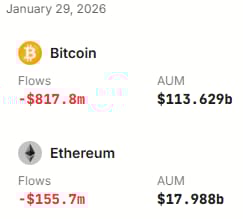
Right now, liquidity is the real problem. Close to $1 billion left U.S. spot crypto ETFs in a single day. Other alts also saw outflows after the Fed signaled it’s in no rush to cut rates. Even though interest rates have come down, global liquidity is still tight. Investors moved into gold for safety while crypto sold off.
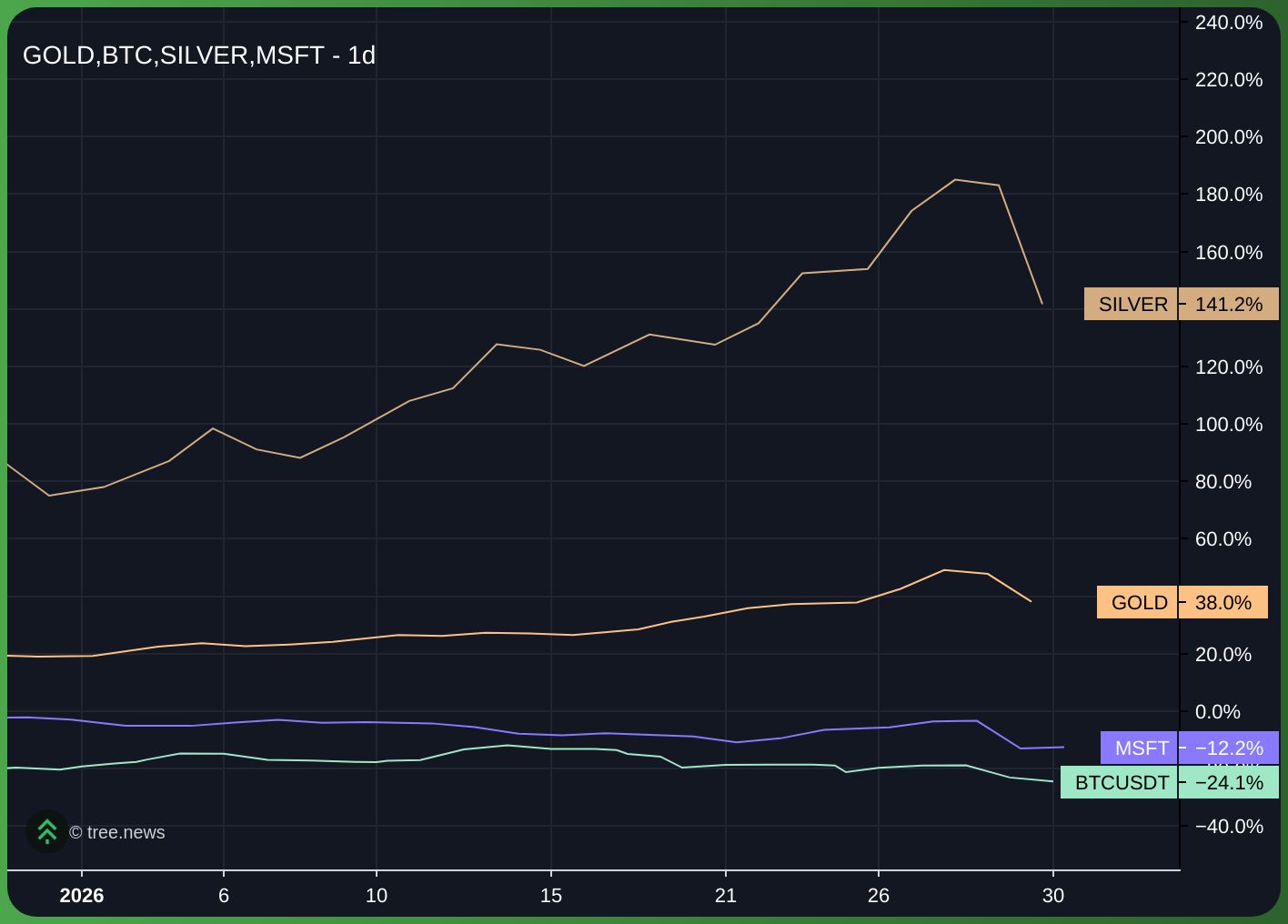
Bitcoin is heading toward its fourth straight monthly loss, something not seen since 2018. Stocks made things worse. Microsoft fell 12% in its worst day since 2020, pulling markets lower. Gold and silver also sold off sharply after hitting record highs.
Political risk is rising too. Congress failed to pass a funding bill, raising the odds of a government shutdown. The last shutdown coincided with a 15% Bitcoin drop. A similar move now would take Bitcoin to just above $70,000.
For now the market remains shaky as traders continue to navigate through uncertain conditions.
THIS NEWSLETTER IS BROUGHT TO YOU BY:
OPENWALLET
Next-level security for your digital assets
Experience top security with Open Wallet. Your wallet blends user-friendliness with strong security.
|  |

SOCIAL SENTIMENT
SEC Delays Crypto Exemptions Indefinitely
The crypto industry just lost its timeline. SEC Chair Paul Atkins walked back his promise to release crypto innovation exemptions in January.
The plan would have given crypto companies a guarantee that certain activities in tokenized securities and DeFi wouldn't trigger enforcement.
At a crypto event Thursday, Atkins said "we're still working on that" and declined to commit to any timeline. He emphasized the crypto bill in the Senate could impact timing, adding "it would be nice to see direction from Congress."
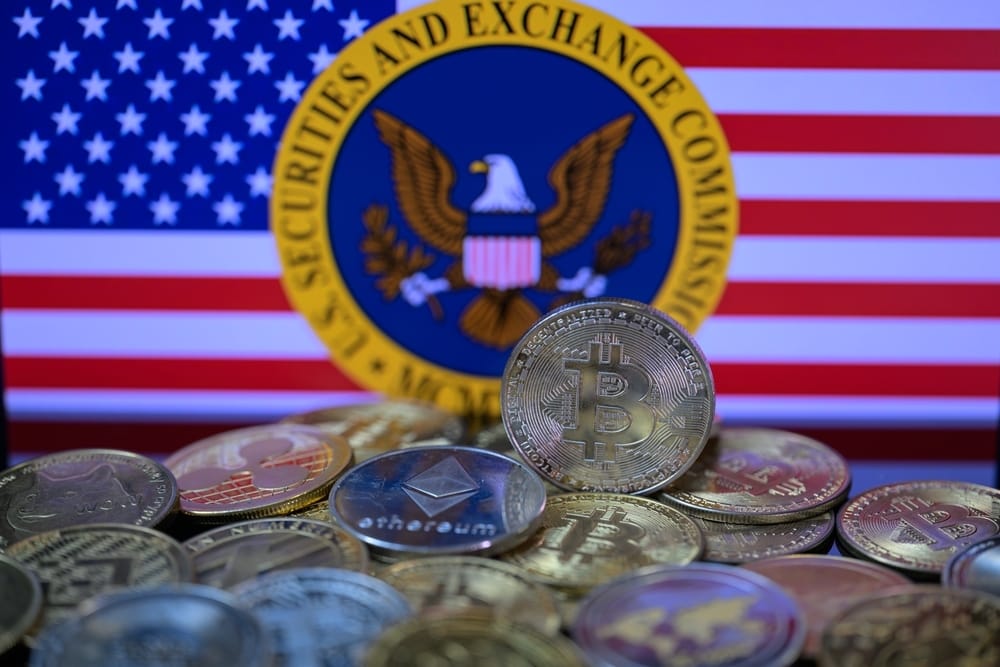
The shift came days after JPMorgan, Citadel, and SIFMA met with the SEC to express concerns. They're worried exemptions for tokenized securities could "undermine investor protection and lead to market disruptions."
Senate negotiations stalled too. Democrats accused Republicans and the White House of walking away from bipartisan talks on a crypto bill that would legalize most of the U.S. crypto industry.
Regulatory clarity was supposed to be crypto's bright spot in 2025/26. Instead, it's stuck in politics while the market bleeds. Even if the Clarity Act passes, it's unlikely to drive prices higher short term.
NEWS OVERVIEW
The Latest Crypto Headlines 📰
Binance Converts $1B SAFU Fund Into Bitcoin Amid Market Drop
Binance plans to shift its $1 billion SAFU fund entirely into bitcoin, signaling long-term confidence as crypto markets slide to multi-month lows.
Vitalik Buterin Commits $45M to Open-Source Security and Privacy
Vitalik Buterin allocated over $45 million in ETH to fund open-source security, privacy, and self-sovereignty projects across software and hardware.
21Shares Launches Solana Staking ETP Using JitoSOL
21Shares introduced a Europe-listed ETP offering Solana exposure with liquid staking yield via JitoSOL, expanding institutional access to onchain returns.
Bybit Plans IBAN Accounts as It Moves Toward Neobank Services
Bybit plans to launch IBAN-based fiat accounts in February, adding neobank-style features and expanding beyond crypto trading into payments and custody.
YOUTUBE INFLUENCER SUMMARY
Summary From The Top Influencers 📷️
Benjamin Cowen – Why is Bitcoin Dropping? (30.01.2026 Summary)

In this video, Benjamin Cowen explains why he believes Bitcoin is dropping and why he expects further downside. His core argument is that the market has likely already completed its cycle and is now in a typical post-peak bear phase.
Key points
Cowen argues the Bitcoin cycle likely topped in Q4 2025, with the cycle length matching the prior two cycles almost exactly, suggesting the bull market has ended.
He notes Bitcoin has historically peaked in Q4 of the post-election year (2013, 2017, 2021, and now 2025), and sees no strong reason this cycle should behave differently.
He rejects the idea that the bull market must continue because altcoins did not rally, pointing out a similar lack of altcoin rotation in 2019.
The current setup resembles 2019, where Bitcoin topped on apathy rather than euphoria, leading to a slow, grinding decline with lower highs and lower lows.
Cowen emphasizes global net liquidity over M2, arguing that stocks can rise while crypto falls when liquidity is not expanding.
He warns that waiting for a rotation from gold into crypto is risky, since Bitcoin often falls harder than metals during pullbacks.
Based on prior cycles, he suggests a roughly one-year bear market, potentially running from October 2025 to October 2026.
Takeaway
Cowen’s view is that Bitcoin is falling because the cycle has likely ended and liquidity conditions remain unfavorable. Until liquidity improves or market structure changes, he expects continued downside rather than a quick recovery.
Paul Barron – Crypto Crashes After CLARITY Vote Again! (30.01.2026 Summary)

In this video, Paul Barron breaks down why crypto sold off again following renewed uncertainty around the CLARITY Act. He argues the market reaction is less about macro and more about political risk, regulatory pressure, and banks tightening their grip on how crypto is allowed to operate.
Key points
Crypto markets dropped sharply after it became clear the Senate version of the CLARITY Act is stalling, with banks and lobby groups actively pushing back against pro-crypto provisions.
Barron believes capital is rotating out of crypto and into precious metals, with traders treating gold and silver volatility more like crypto-style trades.
While the Fed appears done hiking and edging toward easing, Barron argues this is not what’s driving crypto right now. Regulation is the dominant force.
He points to banks pressuring the SEC and White House, especially around tokenized securities, stablecoins, and DeFi, which is creating instability and fear in the market.
Tokenized stocks are moving forward, but largely under a KYC, bank-controlled model. Barron sees this as TradFi trying to own tokenization while sidelining DeFi.
Platforms like Robinhood are positioned to benefit by launching tokenized equities under strict compliance, while permissionless DeFi faces growing restrictions.
Despite the sell-off, Barron thinks blockchains tied to tokenization infrastructure could still win long term, particularly Solana and Arbitrum-related ecosystems.
Takeaway
Barron’s view is that crypto is crashing less because of macro conditions and more because regulatory clarity is breaking down. Banks are winning the short-term battle, DeFi is under pressure, and markets are reacting to political risk rather than fundamentals.
CRYPTO MEMES


HELP US IMPROVE
Rate today’s newsletter |
WE ALSO READ
|

|

|


The information provided in this newsletter is for general informational and educational purposes only. It should not be considered financial advice or a recommendation to buy or sell. Please consult a qualified financial advisor for personalized advice that considers your individual financial situation and goals.